Performance Marketing vs Traditional Marketing: What Works Better?
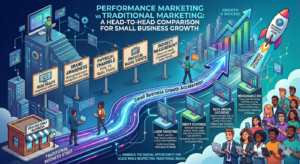
Performance Marketing vs Traditional Marketing: What Works Better?Marketing has evolved significantly over the years. While traditional marketing methods such as television, radio, newspapers, and billboards have long been used to reach consumers, performance marketing has emerged as a data-driven approach that focuses on measurable results. Businesses today often wonder which strategy delivers better outcomes. The answer depends on business goals, target audiences, and budget, but understanding the strengths and weaknesses of each approach can help make the right decision.
What Is Traditional Marketing?
Traditional marketing refers to conventional advertising methods that existed before the rise of digital platforms.
Common Examples:
- Television commercials
- Radio advertisements
- Newspaper ads
- Magazine advertisements
- Billboards
- Direct mail campaigns
Traditional marketing is primarily designed to increase brand awareness and reach large audiences.
Advantages of Traditional Marketing:
- Strong local market presence
- Broad audience reach
- High credibility and trust
- Effective for mass-market campaigns
Limitations of Traditional Marketing:
- Expensive advertising costs
- Difficult to measure results accurately
- Limited audience targeting
- Less flexibility once campaigns are launched
What Is Performance Marketing?
Performance marketing is a digital marketing approach where businesses pay based on specific actions such as clicks, leads, sales, or conversions.
Common Performance Marketing Channels:
- Google Ads
- Facebook Ads
- Instagram Ads
- LinkedIn Advertising
- Affiliate Marketing
- Native Advertising
Unlike traditional marketing, performance marketing focuses on measurable outcomes and return on investment (ROI).
Advantages of Performance Marketing:
- Highly targeted audience reach
- Real-time performance tracking
- Cost-effective spending
- Easy campaign optimization
- Better ROI measurement
Limitations of Performance Marketing:
- Requires continuous monitoring
- Increasing competition can raise costs
- Success depends on data and strategy
- Results may take time to optimize
Key Differences Between Performance Marketing and Traditional Marketing
| Factor | Traditional Marketing | Performance Marketing |
|---|---|---|
| Cost | Usually expensive | Flexible and scalable |
| Audience Targeting | Broad audience | Highly targeted audience |
| Measurement | Difficult to track | Easily measurable |
| Flexibility | Limited changes after launch | Real-time adjustments |
| ROI Tracking | Challenging | Accurate and transparent |
| Speed of Results | Slower feedback | Immediate insights |
Which Delivers Better ROI?
Performance Marketing vs Traditional Marketing: What Works Better?Performance marketing generally provides better ROI because businesses only pay for measurable actions. Advertisers can track every click, lead, and conversion, allowing them to optimize campaigns continuously.
For example:
- A business running Google Ads can identify which keywords generate sales.
- Social media campaigns can be adjusted instantly based on engagement and performance data.
- Marketing budgets can be allocated to the highest-performing channels.
Traditional marketing often struggles to provide this level of transparency and accountability.
When Traditional Marketing Still Works
Despite the growth of digital channels, traditional marketing remains valuable in certain situations.
Best Uses:
- Large-scale brand awareness campaigns
- Local community marketing
- Luxury and premium brands
- Reaching audiences with limited digital presence
- Building credibility through established media channels
For some industries, combining traditional and digital marketing creates the strongest impact.
When Performance Marketing Is the Better Choice
Performance marketing is ideal for businesses that want measurable growth and efficient budget allocation.
Best Uses:
- Lead generation
- E-commerce sales
- Customer acquisition
- App downloads
- Online service promotion
- Startup and small business growth
Businesses seeking fast, data-driven results often choose performance marketing as their primary strategy.
The Most Effective Approach: Combining Both
Rather than viewing performance marketing and traditional marketing as competitors, many successful brands use both.
For example:
- A television campaign can increase brand awareness.
- Digital performance campaigns can retarget interested viewers and convert them into customers.
This integrated approach allows businesses to maximize reach while maintaining measurable results.
Conclusion
Performance Marketing vs Traditional Marketing: What Works Better?Performance Marketing vs Traditional Marketing: What Works Better?While traditional marketing remains valuable for brand awareness and mass-market exposure, performance marketing offers greater targeting, flexibility, and measurable ROI. For most modern businesses, especially those focused on growth and lead generation, performance marketing delivers stronger results and better budget efficiency.
The most successful brands understand that the best strategy is often a balance of both approaches, using traditional marketing to build awareness and performance marketing to drive conversions.
At Invisible Digital, we help businesses create data-driven marketing strategies that combine creativity, performance, and measurable results to accelerate growth and maximize return on investment.