
5 Different Psychology Behind Successful Branding
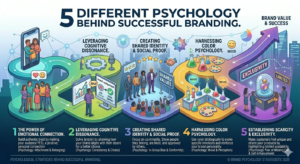
Branding is much more than a logo, color palette, or catchy tagline. The most successful brands in the world understand how people think, feel, and make decisions. They use psychology to create emotional connections, build trust, and influence purchasing behavior. Understanding the 5 Different Psychology Behind Successful Branding can help businesses create stronger relationships with customers and establish a lasting presence in the market.
In today’s competitive business environment, companies that understand the 5 Different Psychology Behind Successful Branding often outperform their competitors because they know how to connect with consumers on a deeper level. Let’s explore the psychological principles that make branding truly effective.
1. The Psychology of Trust
Trust is the foundation of every successful brand. Customers are more likely to purchase from brands they perceive as reliable, honest, and consistent. One of the most important aspects of the 5 Different Psychology Behind Successful Branding is building credibility over time.
Brands establish trust by:
- Maintaining consistent messaging
- Delivering on promises
- Showcasing customer reviews
- Providing excellent customer service
- Being transparent in communication
When customers trust a brand, they are more likely to remain loyal and recommend it to others. Trust reduces the perceived risk of making a purchase and creates a positive brand image.
2. The Psychology of Emotions
People often make buying decisions based on emotions and justify them later with logic. This emotional connection is a critical element of the 5 Different Psychology Behind Successful Branding.
Successful brands evoke emotions such as:
- Happiness
- Excitement
- Security
- Inspiration
- Belonging
For example, many leading brands focus on storytelling rather than simply promoting products. Stories create emotional connections that help customers remember the brand and develop a stronger attachment to it.
Brands that successfully trigger positive emotions often enjoy higher customer loyalty and engagement because consumers associate positive feelings with their products or services.
3. The Psychology of Consistency
Consistency plays a significant role in brand recognition. Another key principle within the 5 Different Psychology Behind Successful Branding is ensuring that customers experience the same brand personality across every touchpoint.
Consistency includes:
- Visual identity
- Tone of voice
- Customer experience
- Social media presence
- Marketing messages
When customers repeatedly encounter a consistent brand experience, they become more familiar with the brand. Familiarity creates comfort, and comfort increases trust.
Think about the world’s most recognizable brands. Their logos, messaging, and customer experiences remain remarkably consistent over time, making them instantly recognizable.
4. The Psychology of Social Proof
Humans naturally look to others when making decisions. This behavior is known as social proof and is one of the most influential components of the 5 Different Psychology Behind Successful Branding.
Examples of social proof include:
- Customer reviews
- Testimonials
- Influencer endorsements
- User-generated content
- Case studies
When potential customers see others having positive experiences with a brand, they feel more confident about making a purchase themselves.
Social proof reduces uncertainty and builds credibility. This is why many successful brands prominently display reviews, ratings, and customer success stories across their marketing channels.
Businesses that effectively use social proof often experience higher conversion rates and stronger customer trust.
5. The Psychology of Identity and Belonging
People often choose brands that reflect who they are or who they aspire to become. The final principle among the 5 Different Psychology Behind Successful Branding is creating a sense of identity and community.
Consumers don’t just buy products—they buy experiences, values, and lifestyles. Successful brands create communities where customers feel they belong.
Brands can foster belonging by:
- Promoting shared values
- Building online communities
- Encouraging customer participation
- Creating relatable content
- Supporting meaningful causes
When customers identify with a brand’s mission and values, they become more emotionally invested. This often leads to long-term loyalty and advocacy.
The strongest brands make customers feel like they are part of something bigger than a transaction.
Why Understanding Branding Psychology Matters
Understanding the 5 Different Psychology Behind Successful Branding allows businesses to move beyond traditional marketing tactics and create deeper customer connections. Modern consumers have countless choices, making emotional and psychological factors increasingly important.
Brands that successfully apply the 5 Different Psychology Behind Successful Branding can:
- Increase customer loyalty
- Improve brand recognition
- Build trust and credibility
- Drive higher engagement
- Generate long-term business growth
Rather than focusing solely on products or services, successful brands focus on creating meaningful experiences that resonate with their audience.
Conclusion
The 5 Different Psychology Behind Successful Branding reveals that branding is fundamentally about human behavior. Trust, emotions, consistency, social proof, and identity all influence how customers perceive and interact with brands.
Businesses that understand and apply the 5 Different Psychology Behind Successful Branding can create stronger customer relationships, stand out from competitors, and build long-term brand value. As consumer expectations continue to evolve, psychology will remain one of the most powerful tools for creating memorable and successful brands.
At Invisible Digital, we help businesses leverage the 5 Different Psychology Behind Successful Branding to create impactful brand identities, meaningful customer experiences, and sustainable business growth in the digital age.